
So many high school students in
Pakistanis study for long hours, yet they still feel confused or unprepared.
during exams, and that is usually because they depend on weak habits like
rereading books or highlighting lines without checking their memory. In some
respects, this issue becomes bigger when schoolwork, tuition classes, and
Social media all compete for attention at the same time. In this guide, you
will learn study techniques that actually help memory, improve focus, and make
Exam preparation feels more manageable instead of stressful. These methods are
simple, practical, and usually helpful for students, parents, and teachers who
want steady improvement rather than panic before exams.
Study Techniques That Actually Work
Studying well is not just about
reading the same chapter many times, because that approach often gives a false
sense of preparation. In fact, learning works better when you study in a way
that helps your brain pull information out during exams, not just recognize it
on a page. When you use methods like active recall and spaced repetition, you
tend to learn faster and remember things for a longer time.
Use Active Recall Instead of Only Reading
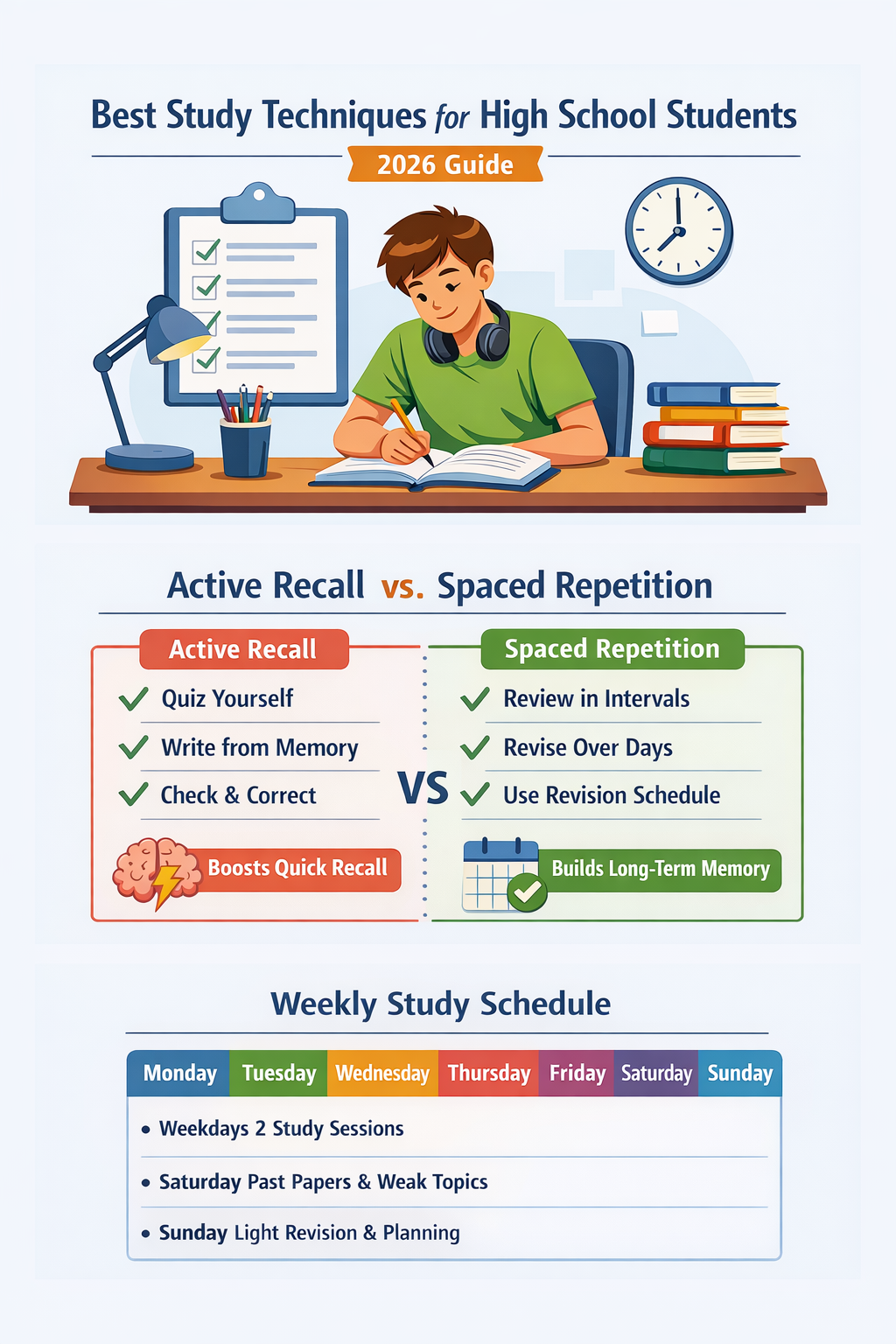
Active recall is when you try to
Remember answers from your own memory before looking back at the book, and that
Habit slowly trains your brain to recall information during exams. This method
feels a bit uncomfortable at first, yet it works better than rereading because
It pushes your brain to practice remembering under pressure.
How to use active recall step by
step:
- First, read one topic or a small section carefully, so
You know what it is about. - Then, close the book or turn the page away, so you
cannot see the content. - Next, write down everything you remember in your own
words, even if it feels messy. - After that, check the book and notice what you missed.
or misunderstood. - Finally, repeat this process until most points come
back to you without help.
For example, if you study biology
chapter on digestion, you can close the book and draw the digestive system from
memory, and then compare it with the textbook to fix mistakes.
Use Spaced Repetition for Long-Term Memory
Spaced repetition means revising the
same topic several times with breaks in between, instead of trying to memorize
everything in one night. This approach helps your brain store information for
longer periods, which is very useful for board exams that cover many chapters.
A simple spaced repetition plan can
look like this:
- Day 1: Learn the topic properly and understand the
basics. - Day 2: Revise quickly and test yourself without reading
too much. - Day 4: Answer short questions from memory.
- Day 7: Practice questions from past papers.
- Day 14: Do a quick final revision to refresh
everything.
This habit improves recall and
reduces last-minute pressure, since you feel more prepared earlier.
Build
A Study Schedule You Can Follow
A good study schedule needs to feel
realistic, or it usually gets ignored after a few days. Many students struggle.
because they create strict timetables that look perfect on paper but do not
match their real routine.
A
Simple Weekly Plan for High School Students
A balanced weekly routine works.
better than extreme daily targets, since it builds consistency without burnout.
You can study on weekdays in short, focused sessions and use weekends for
practice and revision.
Example weekly plan:
- Monday to Friday: Two focused study blocks each day for
main subjects. - Saturday: Past papers practice and work on weak topics.
- Sunday: Light revision and planning for the coming
week.

A Simple Daily Routine That Improves Focus
Short, timed sessions often help.
Your brain stays active without feeling tired too quickly. This routine suits
students who lose attention easily or feel overwhelmed.
Example daily routine:
- Study for 25 to 30 minutes with full attention.
- Take a 5-minute break to relax your mind.
- Repeat this cycle 3 to 4 times, depending on your time.
Note-Taking
Methods That Save Time
Notes should make revision easier.
not create extra work that never gets used. Many students spend hours making
neat notes, yet they never revise them properly, which lowers exam results.
Use the One-Page Notes Method
After finishing a chapter, you can
Try to fit the full summary onto one page, which forces you to focus only on
key ideas. This habit helps you see what actually matters instead of copying.
everything.
Your one-page notes can include
headings, short definitions, formulas, diagrams, and the most important points
from the chapter.
Choose A Practical Note Style for Exams
Notes work best when they are
written in short, clear points that are easy to scan. You can use headings, bullet
points and small examples, and you should highlight only keywords instead of
full paragraphs.
If note-taking starts taking longer
than learning the topic, it is usually better to stop and move to practice
questions, since practice helps memory more than writing.
How to Study for Exams Using Past Papers
Past papers are one of the most
helpful tools for exam preparation, since they show common question styles and
how answers are expected. They also help with time control and reduce fear.
since the exam format feels familiar.
A Step-by-Step Past Paper Strategy
Past papers work best after you have
studied a chapter properly.
You can follow this process:
- Choose one chapter you studied recently.
- Solve 10 to 15 questions without using notes.
- Check your answers and see where you went wrong.
- Write short mistake notes for errors that repeat.
- Try the same questions again after three days.
Make a Mistake Notes Notebook
A mistake notebook keeps all weak
areas in one place, which makes revision easier. You can write confusing ideas,
repeated errors, and tricky formulas there, and then revise it before exams.
Improve Focus While Studying
Many students want to study but lose
focus due to phones, noise, or stress. Focus usually improves when you build a
better environment and follow small rules daily.
Improve Your Study Environment
You can choose a quiet corner and
Keep only one notebook open at a time. It also helps to keep water nearby and
Remove your phone from the desk to reduce distraction.
Use the Phone Parking Rule
If phone checking becomes a habit,
You can place your phone in another room or give it to a parent during study.
time. If you need it for learning, airplane mode helps block interruptions.
Manage Random Thoughts During Study
When random thoughts appear, you can
Write them on a paper and return to studying. This small habit lowers anxiety.
since your mind knows those thoughts will be handled later.
Memory Techniques for Long Answers and Concepts
Subjects like biology, Islamiat, and
Pak Studies needs strong memory for full answers. Memory improves faster when
You explain ideas, organize them, and test yourself often.
Use the Teach-Back Method
You can explain the topic out loud.
as if teaching someone else. If you can explain it clearly without the book, it
usually means the idea is understood and remembered.
Use Chunking to Reduce Overload
Chunking means breaking large topics.
into smaller parts. For example, you can divide the Pakistan Movement into
phases and learn one phase at a time.
Use Simple Mnemonics When Needed
Mnemonics help with lists or
sequences, especially when facts feel confusing. You can keep them simple and
Still test yourself afterward to confirm memory.
Manage Exam Stress Without Losing Performance
Exam stress affects sleep, focus,
and recall, which can lower performance. Stress becomes easier to manage when
You build small routines and protect daily habits.
Use A Quick 10-Minute Stress Routine
You can calm your mind by doing slow
breathing, taking a short walk, and writing a small plan for the next task.
This routine works well before studying or sleeping.
Protect Your Sleep Like a Study Tool
Sleep helps memory settle, so aiming
for at least seven hours is helpful. Late-night cramming may work once in a
while doing it often reduces performance.Quick Comparison Table: Which Method Works Best?
| Method | Best For | Time Needed | Result |
|---|---|---|---|
| Active recall | learning deeply | medium | high retention |
| Spaced repetition | long-term memory | low daily | strong recall |
| Past papers practice | exam scoring | medium-high | higher marks |
| Re-reading only | quick familiarity | low | low retention |
| Making long notes | detailed revision | very high | often wasted |
FAQs
1)
What are the best study techniques for high school students?
The most helpful techniques include
active recall, spaced repetition, and past papers practice, since they support
memory and exam performance.
2)
How many hours should a high school student study daily?
Most students do well with two to
four focused hours, although this depends on workload and consistency.
3)
How can I stop procrastinating while studying?
You can start with a small 10-minute
goal, remove phone distractions, and use a timer-based routine.
4)
Is tuition enough for good marks?
Tuition helps, yet self-study,
Revision habitsRevision habits and past paper practice often matter more.
5)
What is the best time to study?
The best time is when your home is
quiet,quiet, and your mind feels fresh, which is often early morning or evening.
6)
How do I memorize long answers quickly?
Long answers become easier with
teach-back, chunking, and short notes, followed by testing without looking.
7)
How do I improve focus while studying?
Focus improves with short study.
blocks, a quiet setup, and keeping phones away.
8)
How can parents help students study better?
Parents can help by giving a calm
space, supporting routines, and encouraging effort without pressure.
9)
What should teachers suggest for better study habits?
Teachers can suggest quizzes, spaced
revision, and exam-style questions.
10)
What should I do one week before exams?
In the final week, you can focus on
past papers, revise mistake notes, and keep sleep and calm routines steady.
Final Thoughts + CTA
Better marks usually come when you
Stop relying on long reading sessions and start using methods that strengthen
memory and exam confidence. When you follow active recall, spaced repetition,
and past paper practice regularly, studying feels more controlled and less
stressful. If you want, you can share your class, board, and subjects, and a
A weekly study plan and revision strategy can be created around your exam dates.